Most articles about artificial intelligence in project management read the same way: a list of use cases, a few tool names, and a closing paragraph about the future of work. What they skip is the part that actually matters — why 63% of project managers still do not use AI tools weekly, even when their organization has already paid for them.
The adoption gap is real. The technology works. The disconnect is that most teams try to apply AI broadly instead of matching it to specific, well-defined problems. This article focuses on where AI genuinely helps in project management, where it still falls short, and what it takes to close the gap between having access to AI tools and actually trusting them.

What Is Artificial Intelligence in Project Management?
Artificial intelligence in project management refers to applying machine learning, natural language processing, and automation to the core activities of planning, executing, and monitoring projects. That covers a wide range: scheduling algorithms that predict task durations, NLP tools that summarize meeting notes, risk models that flag projects trending toward delay, and AI assistants that help draft status reports or stakeholder communications.
The distinction worth making is between AI-assisted and AI-driven project management. Most teams today are in the first category — AI augments the project manager judgment rather than replacing it. The PM still makes decisions; AI surfaces information faster and flags patterns a human might miss.
According to PMI research , AI adoption in project management is accelerating across industries. Key application areas include:
- Scheduling and timeline estimation — predicting task durations based on historical data
- Risk identification — detecting early warning signals across project variables
- Resource allocation — matching team capacity and skills to task requirements
- Reporting and communication — generating status updates, meeting summaries, and stakeholder briefs
- Knowledge management — retaining and retrieving project context across sessions and team members
How AI Is Used in Agile Project Management
AI in agile project management fits naturally in some places and creates friction in others. The iterative structure of agile — short sprints, frequent retrospectives, continuous feedback — generates exactly the kind of structured, time-stamped data that machine learning models need to improve over time.
Practical applications that work well in agile environments:
- Sprint velocity prediction: ML models trained on past sprint data can estimate how much work a team will realistically complete, reducing the chronic over-commitment that plagues most agile teams
- Backlog prioritization: AI can score backlog items by business value, effort, and dependency risk, giving product owners a data-informed starting point for sprint planning
- Automated standup summaries: NLP tools can parse project management tool updates, pull request activity, and team communication threads to generate standup summaries, freeing up the daily meeting for actual problem-solving
- Retrospective pattern analysis: AI can identify recurring blockers across retrospectives that humans tend to normalize over time
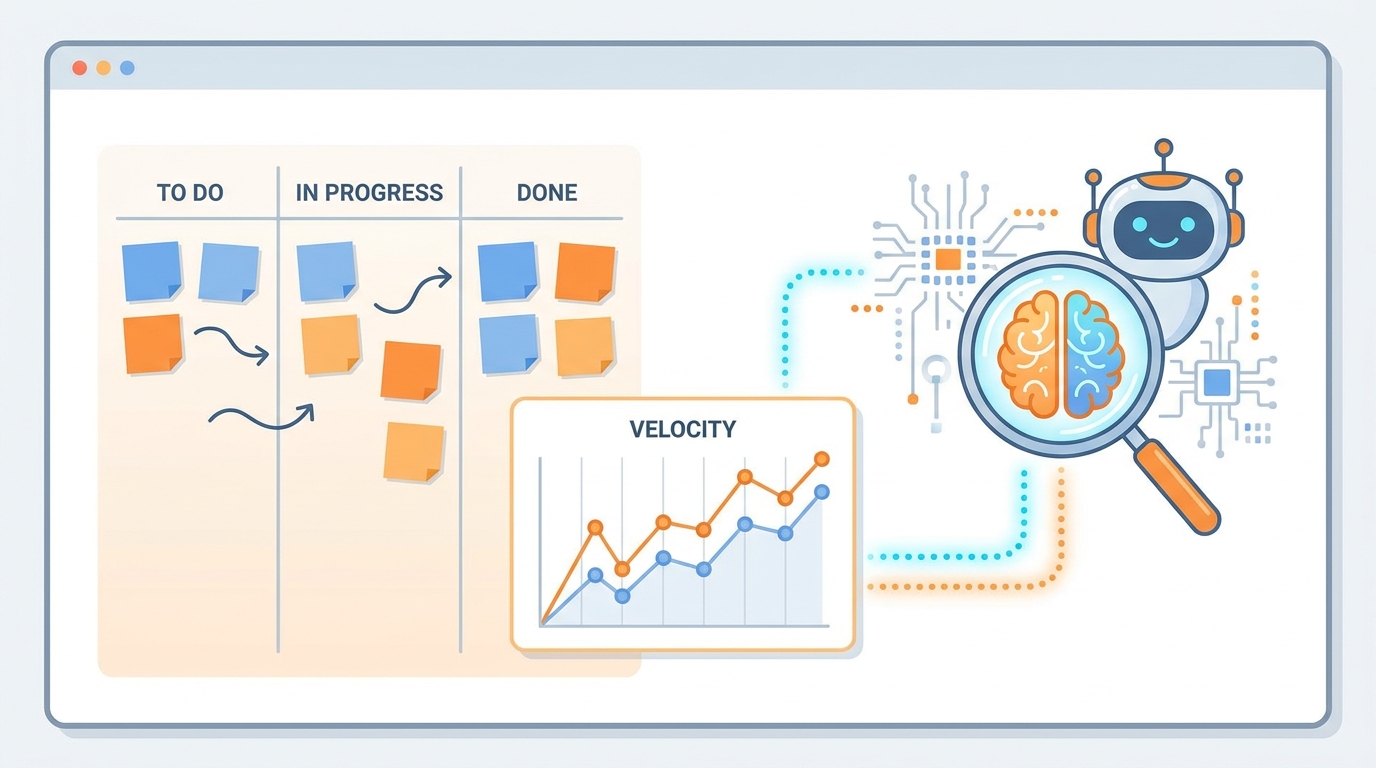
The tension point is AI/ML projects themselves. When the project is an AI initiative, standard agile frameworks break down. Exploratory tasks like data cleaning, feature engineering, and model tuning do not fit neatly into fixed sprint boundaries. The work is inherently unpredictable — a data quality issue discovered in week two can invalidate two sprints of model work. Specialized frameworks like Data-Driven Scrum and Microsoft Team Data Science Process (TDSP) have emerged specifically to handle this mismatch.
Machine Learning in Project Management: Practical Applications
Machine learning in project management moves beyond rule-based automation into pattern recognition and prediction. The difference matters: a rule-based system flags a task as late when it misses a deadline; an ML system flags a task as likely to be late three weeks before the deadline, based on patterns in how similar tasks have progressed.
Predictive scheduling is the most mature application. ML models trained on historical project data — task durations, team velocity, dependency chains — can generate timeline estimates that account for the specific team track record rather than generic industry benchmarks. The catch: this requires clean, structured historical data. Most teams do not have it, or have it scattered across tools that do not talk to each other.
Risk detection uses pattern recognition across past project failures. Common signals include scope creep velocity, stakeholder response time degradation, and resource utilization spikes. ML models can weight these signals against project type and team composition to produce risk scores that update in real time.
Resource optimization matches skills to tasks based on performance history rather than availability alone. A developer who consistently delivers front-end work faster than back-end work is a better fit for a UI sprint, even if their calendar shows equal availability for both.
The honest caveat: machine learning in project management is only as good as the data it trains on. Organizations with fragmented project histories, inconsistent tooling, or low data discipline will see limited returns from ML-based PM tools until the data foundation is in place.
The Real Challenges of AI Adoption in Project Management
The technology is not the bottleneck. The adoption gap — 78% of PM tools include AI features, but only 37% of project managers use them weekly — points to something more structural.
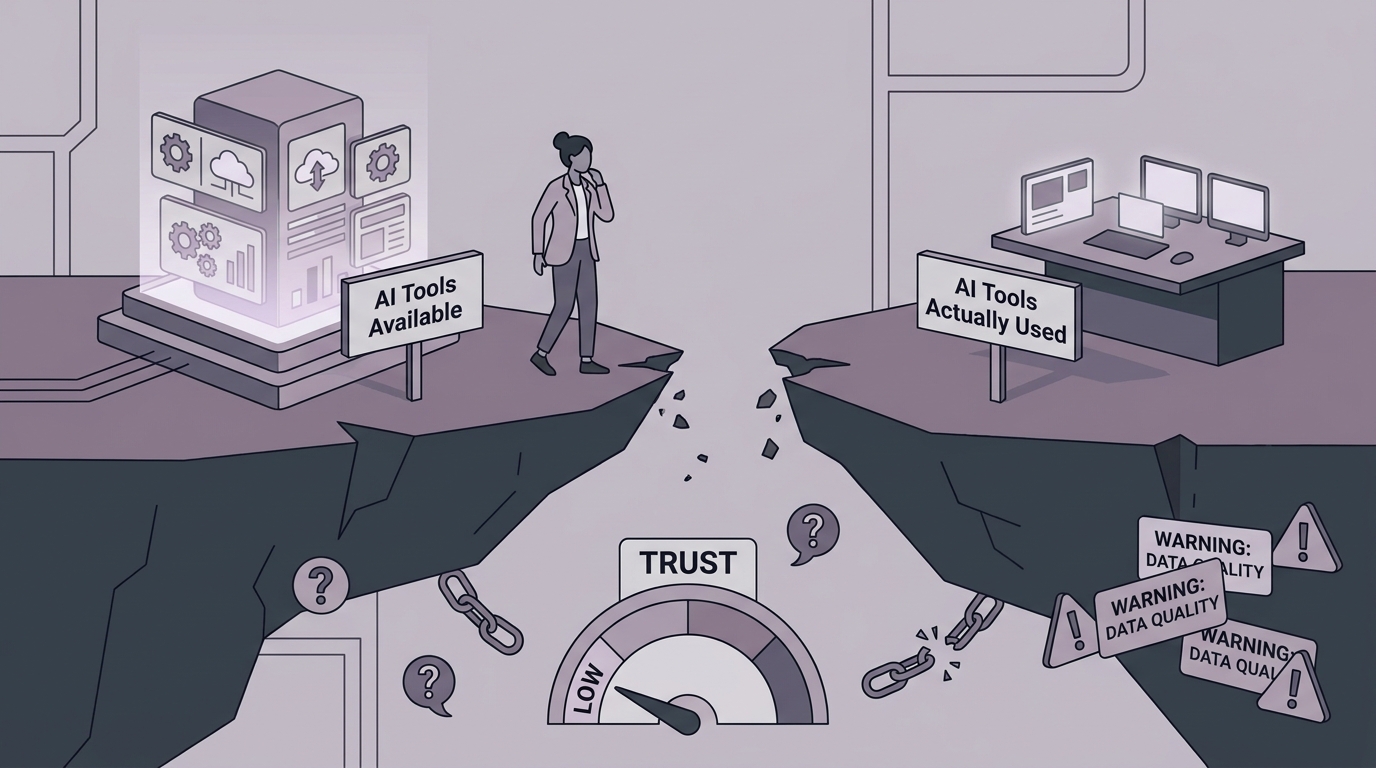
The trust calibration problem is the most underreported barrier. Teams typically need three to six months of running AI suggestions alongside manual processes before they trust AI output enough to act on it directly. During that period, they are effectively doing double the work. This hidden cost does not appear in tool comparisons, but it is a major reason AI adoption stalls after the initial rollout.
Shadow AI is a signal, not just a risk. Nearly half of employees use unsanctioned AI tools without organizational approval, often because approved tools are slower, more restricted, or less capable than free alternatives. The instinct is to treat this as a security problem. The more useful framing: if employees are routing around approved tools, the approved tools are not solving the actual problem.
Skill gaps are structural. Only 20% of project managers report having practical AI experience. The gap is not closeable through a two-day training course. It requires sustained exposure to AI-assisted workflows, which means organizations need to build AI into day-to-day PM work rather than treating it as a separate competency to develop in isolation.
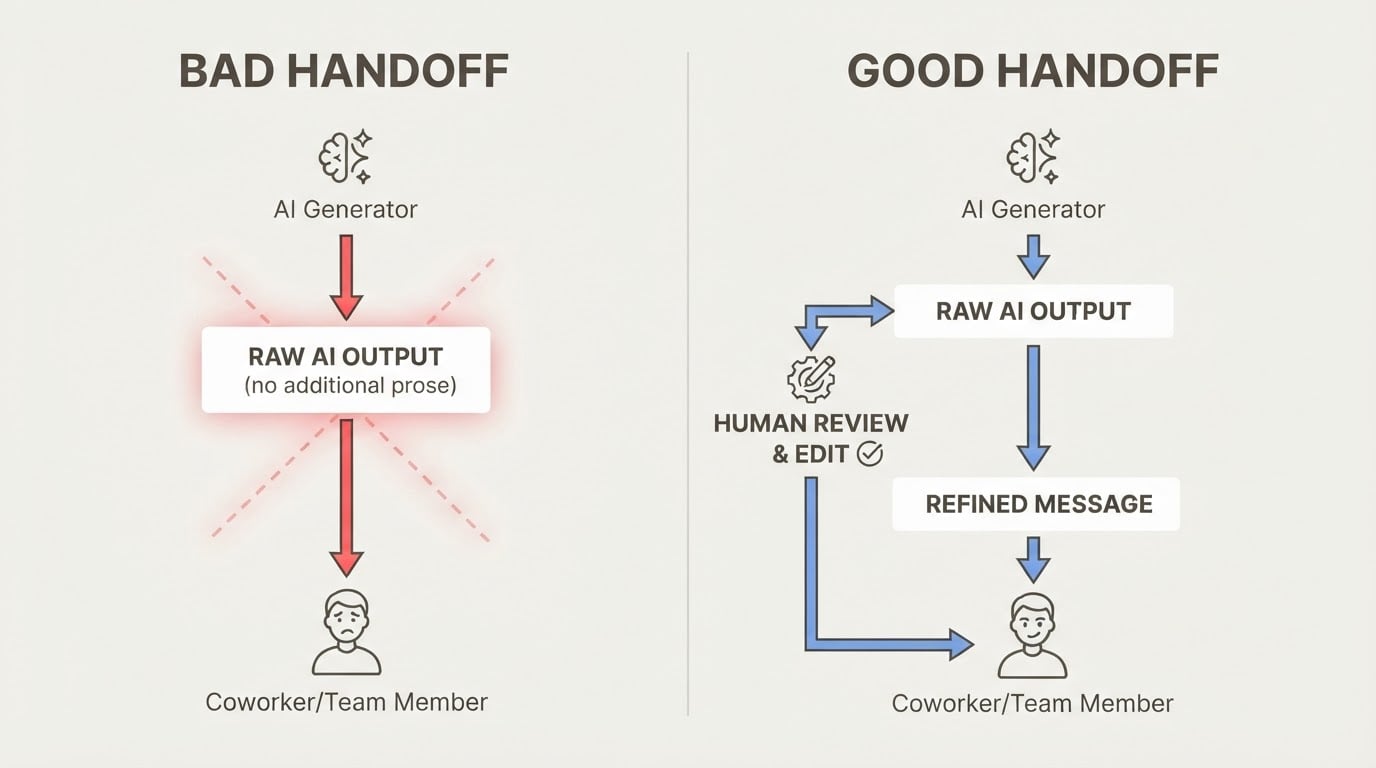
The hallucination problem is real in high-stakes contexts. General-purpose AI models can generate plausible-sounding but incorrect outputs — invented contract clauses, fabricated benchmark numbers, misattributed decisions. In project management, where a wrong assumption about scope or budget can cascade into significant rework, this is not a theoretical risk. The mitigation is not avoiding AI; it is designing workflows that include human review at critical decision points.
Organizational readiness matters more than technology readiness. Research consistently shows that 80% of AI project failures trace back to organizational factors — unclear business objectives, poor data governance, inadequate change management — not technical limitations. Teams that succeed with AI in PM typically start with a specific, well-scoped problem rather than a broad AI transformation mandate.
Knowledge Management: The Overlooked AI Challenge in Project Work
There is a problem with AI-assisted project work that rarely makes it into the use-case lists: AI assistants forget everything between sessions.
Every time a project manager opens a new conversation with an AI tool, they start from zero. The context built up over weeks — the client constraints, the architectural decisions made in sprint three, the stakeholder who needs weekly updates in a specific format — has to be re-explained. In a project environment where context accumulates sprint over sprint, this re-briefing overhead adds up fast.
This is especially acute in agile environments. Each sprint generates new decisions, new constraints, and new institutional knowledge. Without a way to persist that context, AI tools become less useful over time rather than more — the team knows more about the project, but the AI still knows nothing.
The problem compounds when managing multiple clients or workstreams. In our hands-on testing with multi-project workflows, we found that context contamination — where an AI assistant mixes details from different projects — is a consistent failure mode, not an edge case. One project manager described the experience directly: "When I found the AI doing competitive analysis for Client A had mixed in Client B product information, I realized context contamination was not an occasional bug — it was a real and serious problem."
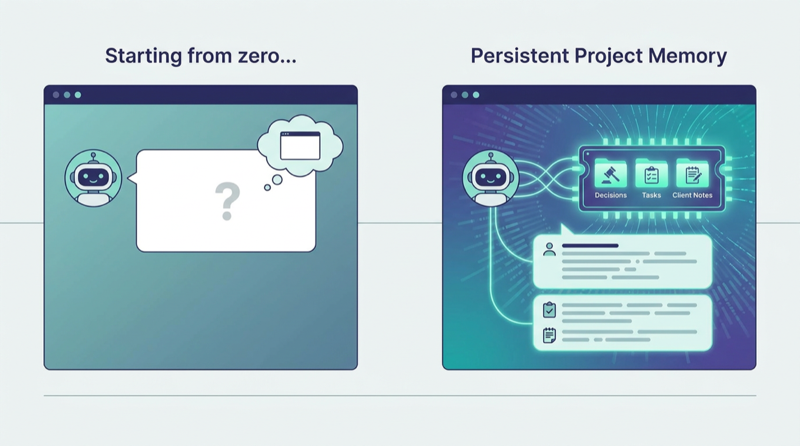
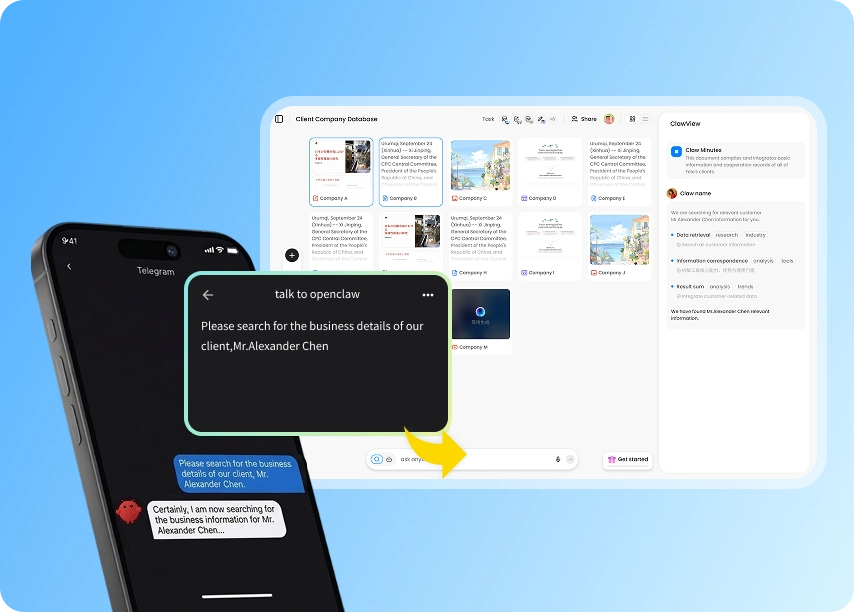
Persistent memory tools address this gap directly. Tools like MemClaw add project-scoped persistent memory to AI assistants like OpenClaw, so project context — decisions, requirements, client history — persists across sessions rather than resetting each time. MemClaw context restoration lets teams reload full project context with a single command, reducing the re-briefing overhead that slows AI-assisted project work.
The knowledge management problem is not unique to AI tools — it is a long-standing challenge in project management generally. AI makes it more visible because the gap between what the team knows and what the AI knows becomes obvious every time a new session starts.
How to Get Started with AI in Your Project Management Workflow
The most common mistake is trying to apply AI everywhere at once. The teams that see real returns from AI in project management start with one specific, well-defined problem.
Recommended entry points:
- Meeting summaries: Low-risk, high-frequency, immediately useful. AI-generated meeting notes free up time and create a searchable record of decisions.
- Status report drafting: AI can pull from project data to generate a first draft; the PM reviews and edits. Saves meaningful time per report cycle.
- Risk flagging: Set up AI to monitor project metrics and surface anomalies. Treat it as an early warning system, not a decision-maker.
Build trust gradually. Run AI suggestions alongside your existing process for one or two sprints before acting on them directly. This calibration period is unavoidable — skip it and you will either over-trust AI output or dismiss it entirely after the first error.
Establish data hygiene first. If you are planning to use ML-based tools for scheduling or risk prediction, audit your historical project data before deploying. Garbage in, garbage out applies here more than anywhere.
Designate an AI champion. For teams using OpenClaw, MemClaw project memory can serve as the shared context layer your AI champion manages.
Teams with a dedicated person responsible for AI tool adoption adopt features significantly faster than teams without one. The champion does not need to be technical — they need to be curious, persistent, and willing to document what works.
The Future of AI in Project Management
The near-term trajectory is AI moving from task automation to decision support. The tools getting the most traction in 2026 are not replacing project managers — they are giving PMs better information faster, so the judgment calls that require human context and stakeholder relationships remain where they belong.
Longer term, autonomous project agents — AI systems that manage dependency chains, flag blockers, and reallocate resources without human prompting — are moving from research to early production. The project manager role in that environment shifts from execution to oversight: setting objectives, managing exceptions, and making the calls that require organizational context no AI model has access to.
The skill that matters most for project managers in 2026 and beyond is not knowing how to use AI tools. It is knowing when not to trust them — recognizing the categories of decisions where AI output requires scrutiny, and building workflows that put human judgment at exactly those points.
Conclusion
Artificial intelligence in project management works. The adoption gap is not a technology problem — it is a matching problem. Teams that succeed start with specific, well-scoped challenges: scheduling accuracy, risk visibility, reporting overhead, knowledge continuity. They build trust gradually, invest in data quality, and treat AI as a tool that augments judgment rather than replaces it.
The knowledge management challenge — AI assistants that forget project context between sessions — is one of the most practical problems to solve first. It is concrete, the friction is immediately visible, and the solutions are available now.
If you are working with AI assistants on project work and losing context between sessions, MemClaw adds persistent project memory to OpenClaw — free to start, installs in under five minutes.
Frequently Asked Questions
What is artificial intelligence in project management? Artificial intelligence in project management refers to applying machine learning, NLP, and automation to planning, scheduling, risk management, and communication tasks. It augments the project manager judgment rather than replacing it.
How is AI used in agile project management? AI in agile project management is used for sprint velocity prediction, backlog prioritization, automated standup summaries, and retrospective pattern analysis. It works best when applied to specific, data-rich parts of the agile workflow.
What are the main challenges of AI adoption in project management? The main challenges are trust calibration (teams typically need months before AI predictions are actionable), skill gaps, data quality issues, and organizational readiness. The technology is rarely the bottleneck.
What is machine learning in project management? Machine learning in project management uses pattern recognition and prediction — for example, flagging tasks likely to be late before they miss a deadline, based on patterns in historical project data.
Why do most project managers not use AI tools regularly? Despite wide availability, many project managers do not use AI tools weekly. The main barriers are trust calibration time, skill gaps, and tools that do not integrate cleanly into existing workflows.