Most teams spend months building AI agents. Almost no one has a plan for managing them.
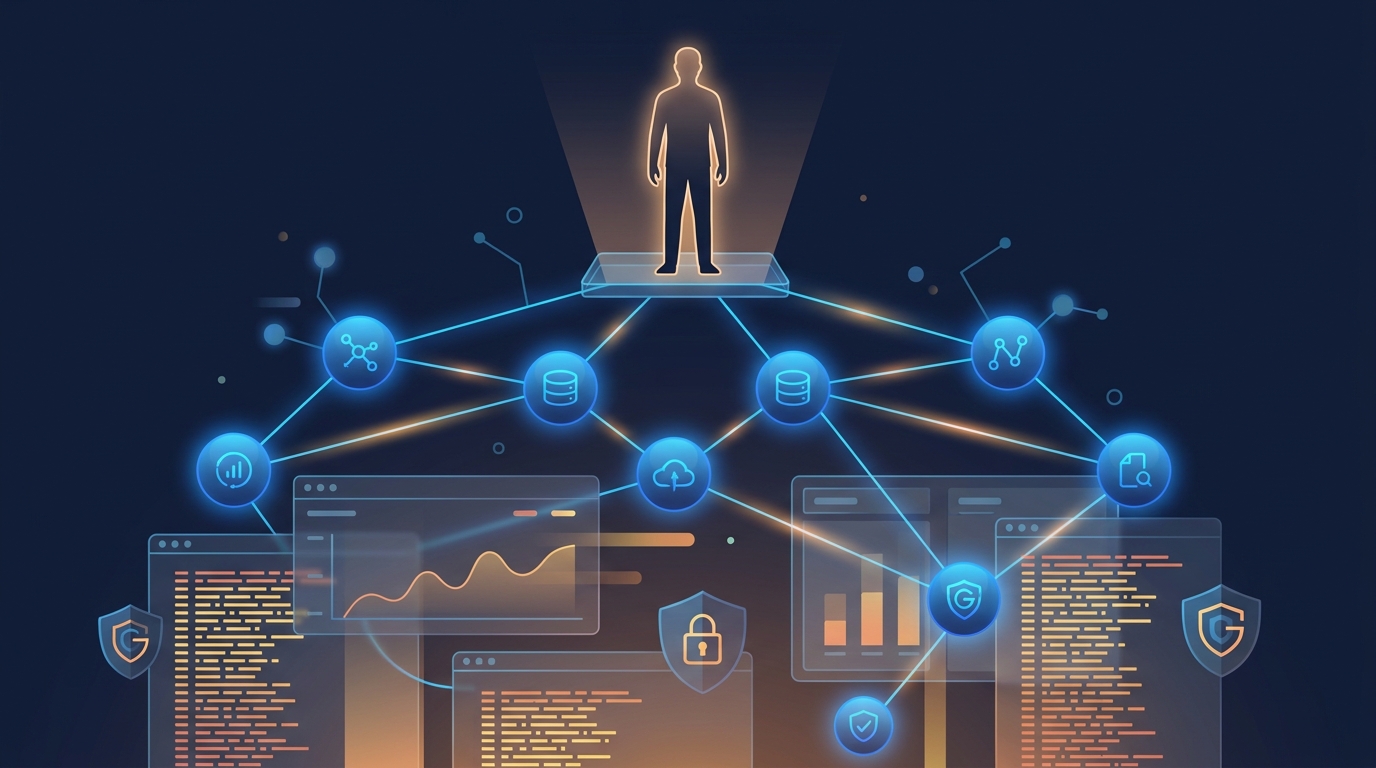
That gap — between deploying an agent and actually managing it — is where most agentic AI projects stall. Agents loop, drift off task, take unintended actions, or quietly rack up API costs while no one is watching. The problem isn't the agent. It's the absence of AI agent management.
This guide defines AI agent management, explains why it matters now, and walks through what it looks like in practice.
What Is AI Agent Management?
AI agent management is the practice of supervising, monitoring, and governing AI agents throughout their operational lifecycle — from initial deployment through ongoing optimization and eventual retirement.
It's distinct from building agents (that's development) and from orchestrating them (that's coordination between agents). Managing AI agents is the ongoing work of making sure they behave as intended, stay on task, and produce reliable outcomes over time.
Think of it this way: orchestration answers "how do agents work together?" Management answers "are they working correctly, safely, and efficiently?"
A well-managed agent has:
- A clear record of what it did and why
- Defined boundaries on what actions it can take
- Persistent context so it doesn't lose track of long-running tasks
- A human review path for high-stakes decisions
- Metrics that measure outcome quality, not just uptime
Why AI Agent Management Matters
The case for management becomes obvious the moment something goes wrong.
Context loss. Agents operating on long workflows hit context window limits and lose track of their original goal. A coding agent that starts a 20-step refactor can drift by step 15, producing output that technically runs but misses the point entirely.
Runaway behavior. Without governance controls, agents retry failed operations indefinitely, send unintended messages, or make API calls outside their intended scope. Teams have discovered overnight API bills in the thousands of dollars from agents that looped on a single failed task.
Accountability gaps. When three agents collaborate on an output, who owns the result? Without a management layer, there's no audit trail and no clear answer.
Scaling failure. A November 2025 McKinsey study found that roughly 60% of companies have begun experimenting with AI agents, yet fewer than a quarter have scaled the technology meaningfully. The bottleneck isn't building — it's managing what gets built.
Core Components of AI Agent Management
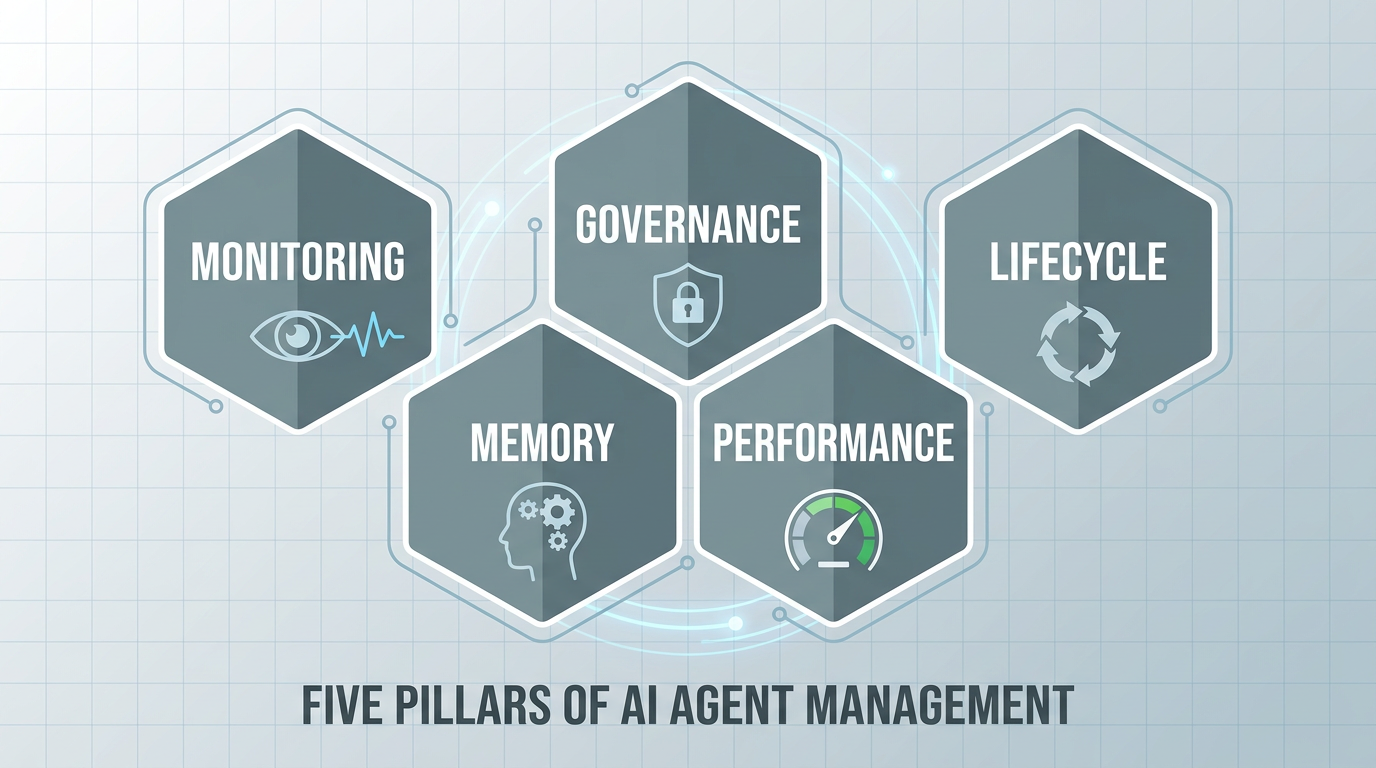
Monitoring and Observability
You can't manage what you can't see. Agent observability means tracking what an agent does at each step: which tools it called, what decisions it made, how long each action took, and how many tokens it consumed.
Traditional application monitoring tools don't map well to agent reasoning. A spike in latency might mean the model is slow, or it might mean the agent is stuck in a reasoning loop. Effective observability surfaces the difference.
Practical minimum: structured logs per agent action, token usage tracking, and error rate by task type.
Memory and Context Management
Agents operating across long sessions or multiple tasks need persistent memory to stay coherent. Without it, every new conversation starts from scratch — the agent has no knowledge of prior decisions, constraints, or progress.
Memory management involves deciding what context to retain, how to structure it, and when to load it. For coding agents, this might mean preserving the project's architecture decisions and naming conventions. For customer-facing agents, it might mean retaining account history and prior interactions.
Context drift — where an agent gradually loses alignment with its original goal — is one of the most common failure modes in production agentic systems.
Governance and Access Controls
Governance defines what agents are allowed to do. This includes:
- Permission scoping: which APIs, databases, and services an agent can access
- Action limits: caps on retries, spend, or message volume
- Human review gates: checkpoints where a human must approve before the agent proceeds
- Audit logging: a tamper-resistant record of every action taken
Without governance, agents operate on implicit trust — which works fine until it doesn't.
Performance Optimization
Uptime is not a useful metric for agents. An agent can run continuously and still produce poor outcomes. Performance management means measuring what actually matters: task completion rate, output accuracy, user satisfaction, and cost per successful outcome.
This requires defining success criteria before deployment, not after.
Lifecycle Management
Agents need to be updated as the underlying models change, as business requirements shift, and as new failure modes are discovered. Lifecycle management covers versioning, staged rollouts, rollback procedures, and retirement planning.
An agent deployed in January 2026 on one model version may behave differently after a model update in March. Without lifecycle controls, those changes are invisible until something breaks.
How AI Agent Management Works in Practice
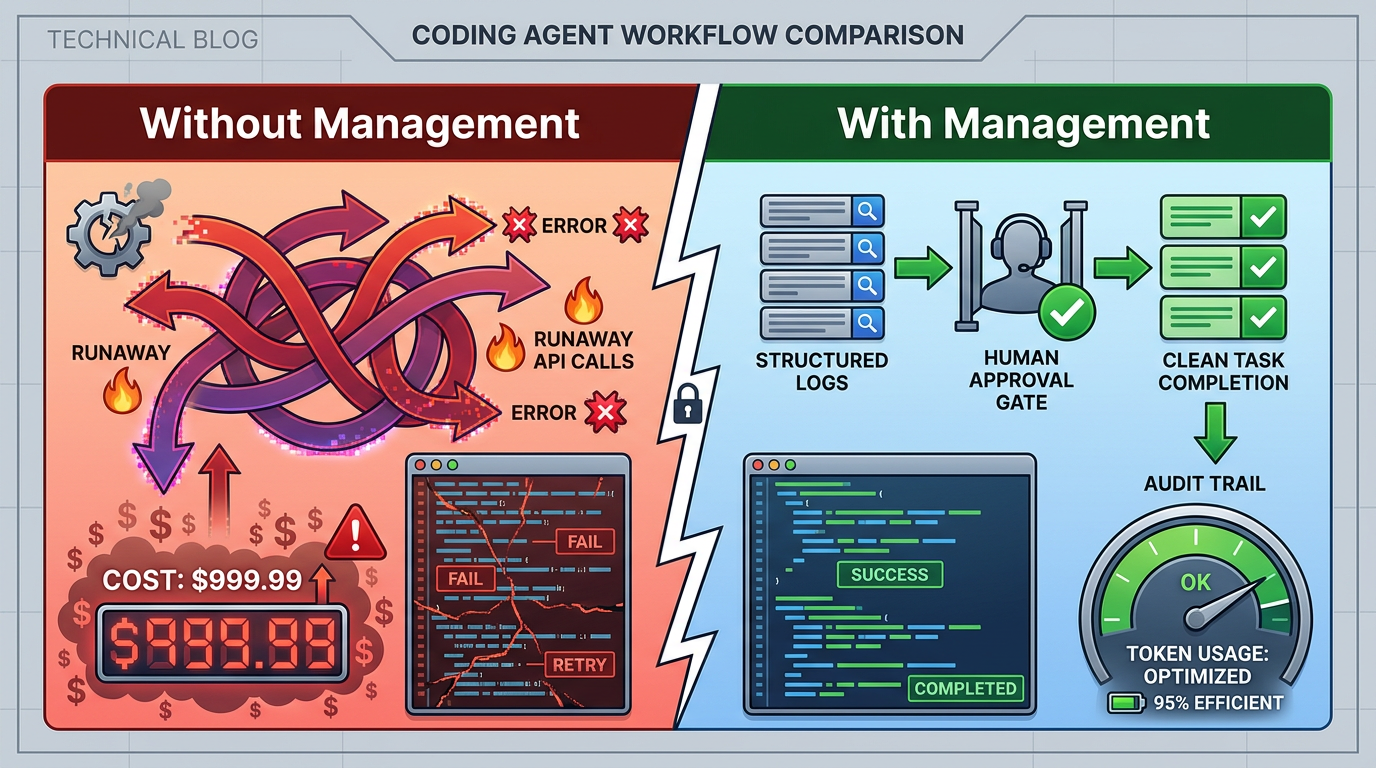
Consider a developer who deploys a coding assistant agent to handle routine code reviews.
Without management: The agent runs fine for the first week. By week three, it's lost context on the project's style guide (context drift), started flagging issues it already approved in prior sessions (no memory), and triggered 200 redundant API calls on a flaky endpoint (no retry limits). No one notices until the bill arrives.
With management: The agent loads project context at the start of each session, logs every review decision with a rationale, caps retries at three per endpoint, and flags any review that touches security-sensitive code for human approval. When something goes wrong, there's a trace to follow.
Tools that address specific pillars of this stack are emerging across the ecosystem. For memory and context management in AI coding workflows, MemClaw provides project-scoped persistent memory that keeps coding agents oriented across sessions — one piece of the broader management picture.
Key Challenges in Managing AI Agents
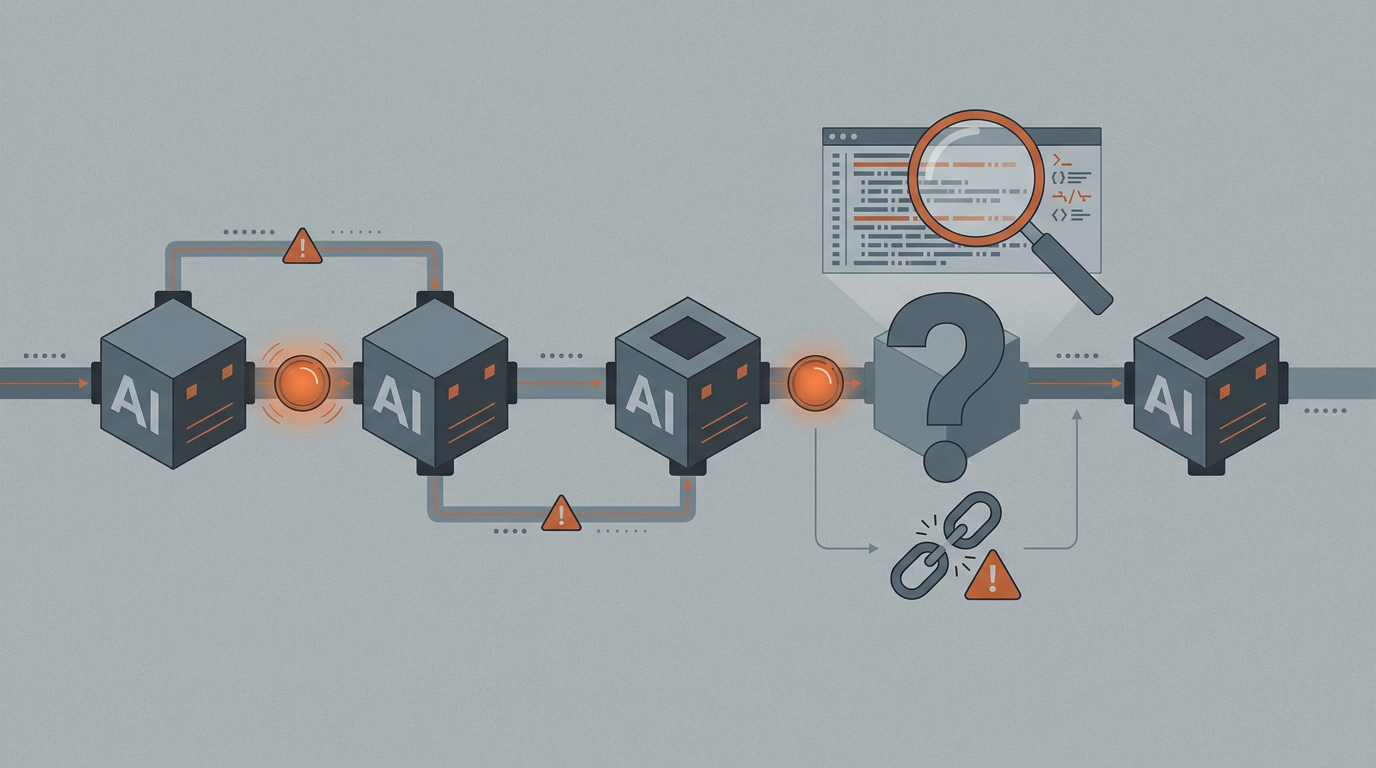
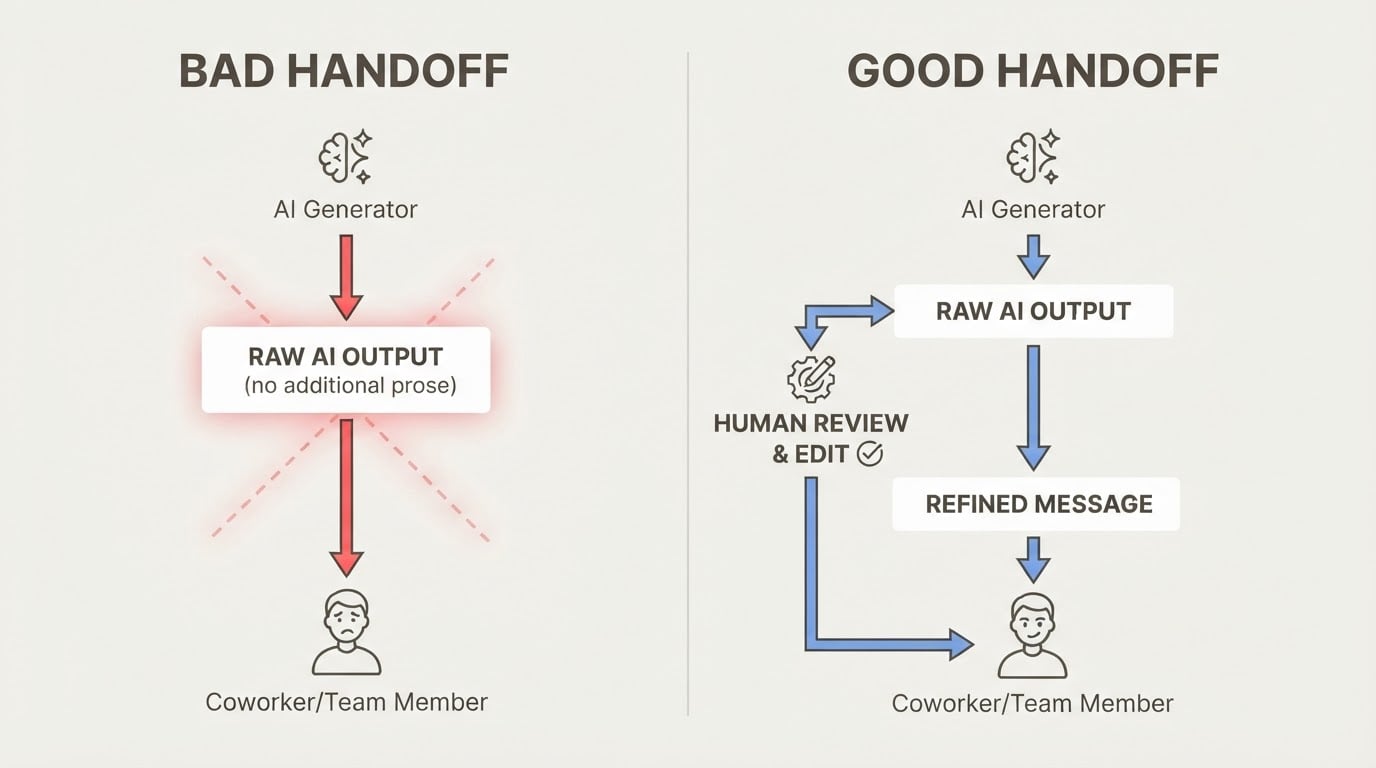
Multi-agent coordination. When agents hand off tasks to other agents, accountability diffuses. Debugging a failure in a five-agent pipeline requires tracing decisions across multiple reasoning chains — a problem that traditional debugging tools weren't designed for.
Observability tooling gaps. Most existing APM and logging tools were built for deterministic software. Agent behavior is probabilistic and context-dependent. The tooling is catching up, but teams often build custom observability layers before commercial solutions mature.
The skills gap. In February 2026, Harvard Business Review formally named "AI Agent Manager" as a new organizational role — someone responsible for making sure agents deliver business outcomes, not just run without errors. Most organizations don't have this role yet, which means management responsibilities fall to developers who are already stretched.
Shadow AI. According to Gartner, roughly 68% of employees use AI tools without IT approval. Agents deployed outside official channels are unmonitored by definition — a governance problem that grows with adoption.
Getting Started with AI Agent Management
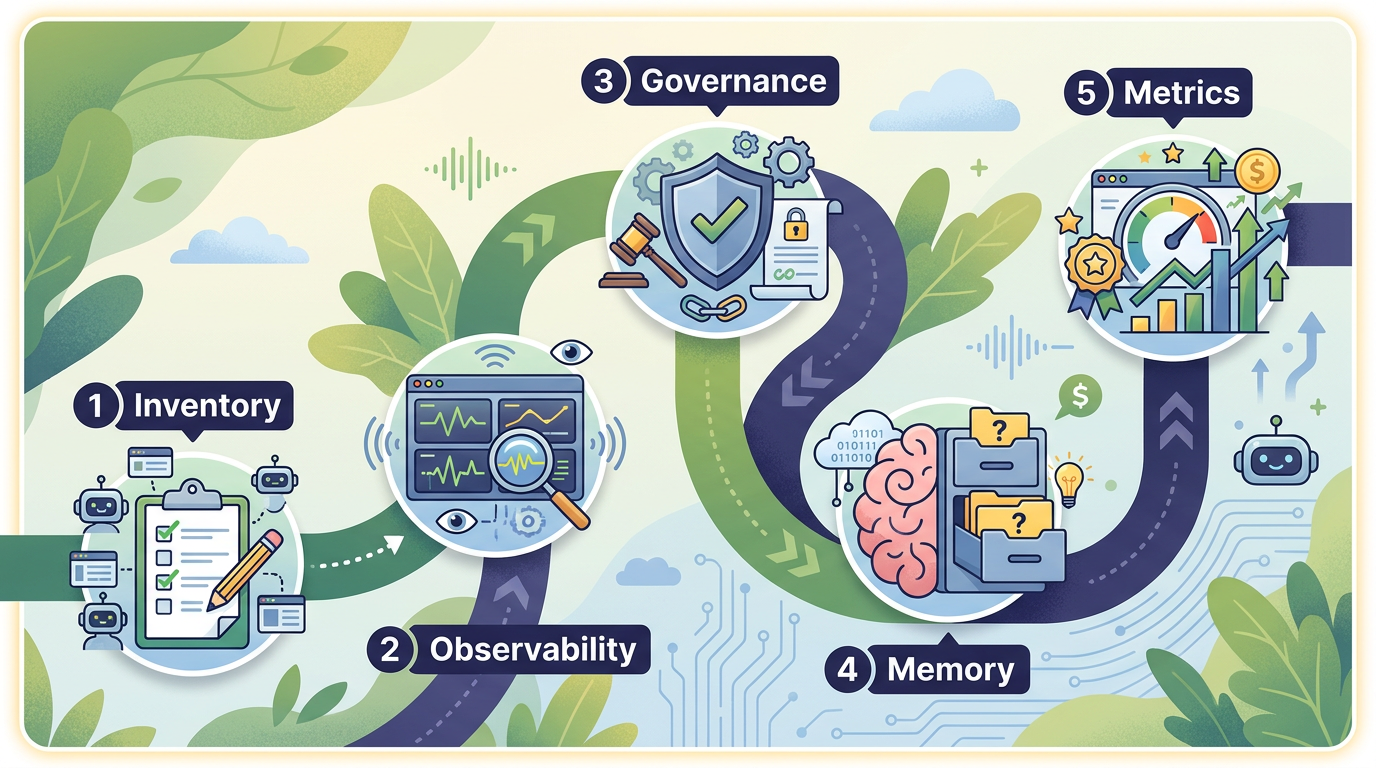
You don't need a full platform on day one. Start with the basics and build from there.
1. Inventory your agents. Know what's running, who deployed it, what it has access to, and what it's supposed to do. You can't manage what you haven't catalogued.
2. Add observability. At minimum: structured logs per agent action, token usage per session, and error rates by task type. This gives you a baseline to detect anomalies.
3. Define governance rules. Set explicit permission boundaries for each agent. Which APIs can it call? How many retries are allowed? What triggers a human review? Write these down before deployment, not after an incident.
4. Manage memory and context. Decide what context each agent needs to stay on task. Build or adopt a memory layer that persists relevant information across sessions without accumulating noise.
5. Measure outcomes. Define what "working correctly" means for each agent before you deploy it. Track those metrics from day one. Uptime is not a success metric.
Frequently Asked Questions
What's the difference between AI agent management and orchestration?
Orchestration coordinates how multiple agents work together — routing tasks, managing handoffs, sequencing steps. AI agent management is the ongoing oversight of agent behavior, performance, and governance. Orchestration is a component of management, not a substitute for it.
Do I need a dedicated AI agent manager role?
For small deployments, no — a developer or product owner can handle management responsibilities. As agent fleets grow, dedicated ownership becomes important. HBR's February 2026 analysis suggests that organizations scaling beyond a handful of agents benefit from someone who owns agent outcomes end-to-end.
What tools support AI agent management?
The tooling landscape is still maturing. Categories include: observability platforms (LangSmith, AgentOps), orchestration frameworks (LangGraph, CrewAI), memory layers, and governance tools. Most teams assemble a stack from multiple tools rather than relying on a single platform.
The Bottom Line
Building an AI agent is the easy part. Managing it — keeping it on task, within bounds, and producing reliable outcomes over time — is where the real work is.
The teams that scale agentic AI successfully aren't the ones with the most sophisticated agents. They're the ones who treat AI agent management as a first-class concern from day one.
If you're working with AI coding agents and want to start with memory and context management, visit memclaw.me to see how project-scoped memory works in practice.